Why Impact Investors Are Putting Their Dollars into Revolutionizing Sustainable Food Production Through Permaculture
In today’s world, where environmental concerns and sustainable practices are at the forefront, understanding the significance of sustainable food production is crucial. This growing focus has led to a noticeable trend in impact investing within the agriculture sector, particularly in the field of permaculture. This article explores the intricate relationship between impact investing and permaculture, highlighting how this partnership is revolutionizing the way we approach food production.
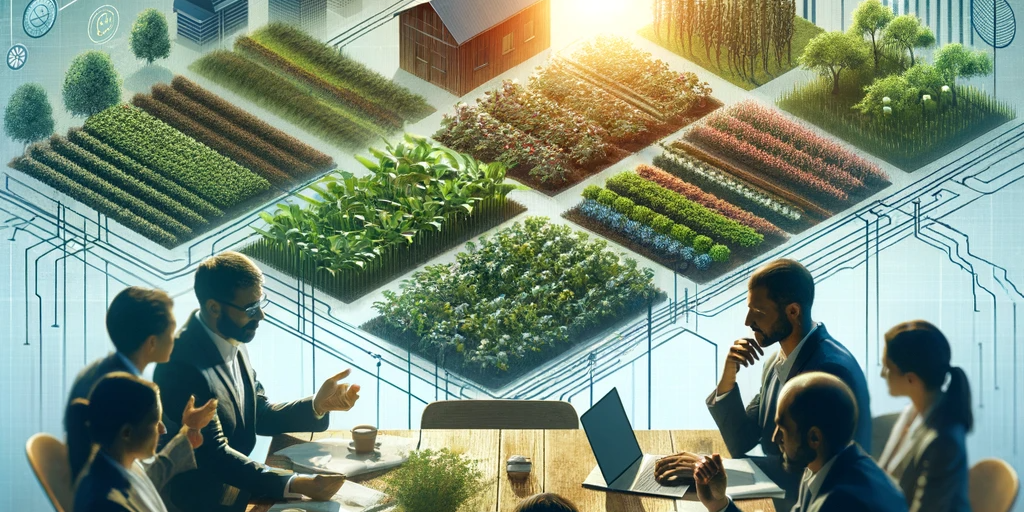
What is Permaculture? Permaculture is a revolutionary approach to agriculture that seeks to create sustainable and self-sufficient food systems by emulating natural ecosystems. Unlike conventional farming practices, permaculture emphasizes the harmonious integration of the land with its inhabitants, aiming for a symbiotic relationship where each element supports and sustains the other.
The Role of Impact Investors Impact investing is becoming increasingly pivotal in the realm of sustainable agriculture. By funding innovative agricultural practices like permaculture, these investors are not just seeking financial returns; they are driven by the desire to generate tangible social and environmental impacts. Their investments are playing a key role in advancing sustainable farming practices, contributing to a healthier planet.
Benefits of Permaculture in Sustainable Food Production Permaculture extends beyond environmental conservation. It offers a multitude of benefits, including reduced environmental impact through the promotion of biodiversity and soil health, economic viability by enhancing food security and reducing reliance on external resources, and social empowerment through community-driven initiatives.
Case Studies: Successful Permaculture Projects Funded by Impact Investors There are numerous success stories of permaculture projects that have flourished with the support of impact investors. These real-world examples serve as a testament to the potential of permaculture in transforming the agricultural landscape, from small community gardens to large-scale farming operations.
Challenges and Solutions in Permaculture Investment While the path to revolutionizing agriculture through permaculture is promising, it is not without challenges. This section addresses common hurdles such as funding, scalability, and knowledge gaps, and discusses innovative solutions that are paving the way for the success of permaculture projects.
Future of Permaculture and Impact Investing The future of agriculture is being reshaped by the synergy of permaculture and impact investing. This section explores the potential of this partnership to bring about global changes in the agricultural sector, envisioning a world where sustainable food production is the norm.
Conclusion The importance of impact investing in permaculture cannot be overstated. As we move towards a more sustainable future, potential investors, policymakers, and communities must recognize and support these efforts. Together, we can sow the seeds for a more sustainable, equitable, and prosperous world.
FAQs
- What makes permaculture different from traditional farming methods?
- Permaculture emphasizes creating sustainable and self-sufficient ecosystems that mimic nature. Unlike traditional farming, which often relies on monoculture and heavy machinery, permaculture focuses on biodiversity, soil health, and the conservation of resources.
- How do impact investors measure the success of their investments in permaculture projects?
- Success in permaculture investments is measured not just in financial returns but also in environmental and social impacts. This includes improvements in biodiversity, soil health, local community engagement, and sustainable food production.
- Can permaculture techniques be applied in urban settings?
- Absolutely! Urban permaculture involves adapting the principles of permaculture to smaller spaces like city gardens, rooftops, and balconies. It’s about maximizing the efficient use of space and resources in an urban environment.
- Are there any notable examples of permaculture positively impacting communities?
- There are numerous examples worldwide. For instance, some communities in Africa have seen significant improvements in food security and soil health through permaculture practices, leading to better overall well-being.
- What can an individual do to support sustainable food production through permaculture?
- Individuals can support sustainable food production by learning about and implementing permaculture practices in their gardens, supporting local permaculture farms, and spreading awareness about the importance of sustainable agriculture.
🌱 Revolutionizing Sustainable Food Production Through Permaculture – Seeking Investment and Collaboration 🌿
Hello fellow innovators and visionaries,
I’m Travis Holzem, founding partner of Food Forest Abundance, we are dedicated to revolutionizing sustainable food production. Our approach is rooted in permaculture, a philosophy that aligns closely with the principles of regenerative agriculture.
🌐 Our Mission:
We’re committed to creating large-scale sustainable and regenerative food and water ecosystems. Our focus extends to integrating innovative energy production methods and leveraging new sustainable technologies.
🤝 Seeking Collaborative Opportunities:
We are actively seeking to connect with investors and professionals who are passionate about:
- Regenerative agriculture and its potential to reshape our food systems.
- Trend hunting and future thinking in sustainable food production.
- Pioneering large-scale regenerative projects in food and water systems.
- Green-focused real estate development, integrating sustainable practices in urban and rural landscapes.
- Advancements in sustainable energy solutions that complement our food production systems.
🔗 Connect With Us:
We are eager to discuss potential collaborations, share insights, and explore how we can collectively make a tangible difference. If you are an investor, a thought leader in regenerative agriculture, or someone who shares our vision of a sustainable future, I would love to connect with you.
Feel free to reach out directly at travis[@]foodforestabundance.com and Let’s pave the way for a greener, more sustainable world together!
To Your Abundance,
Travis Holzem
Founding Partner, Food Forest Abundance
This post is an invitation to like-minded individuals and organizations to join hands in our endeavor to revolutionize sustainable food production. Your support and collaboration can help us achieve our vision of a more sustainable and prosperous future for all.
#SustainableDevelopment #RegenerativeAgriculture #GreenInvesting #Permaculture #EcoInnovation #SustainableEnergy #FutureThinking #GreenRealEstate #FoodSecurity #EcoEntrepreneurship