If you have ever looked at your yard and thought, “This space could be doing more,” the DIY Food Forest Design Blueprint was created for you.
Most yards are underused. They get mowed, watered, fertilized, and maintained week after week, but they rarely give anything meaningful back. A traditional lawn may look clean, but it usually costs time, money, fuel, water, and energy while producing nothing you can eat.
The DIY Food Forest Design Blueprint offers a better path forward.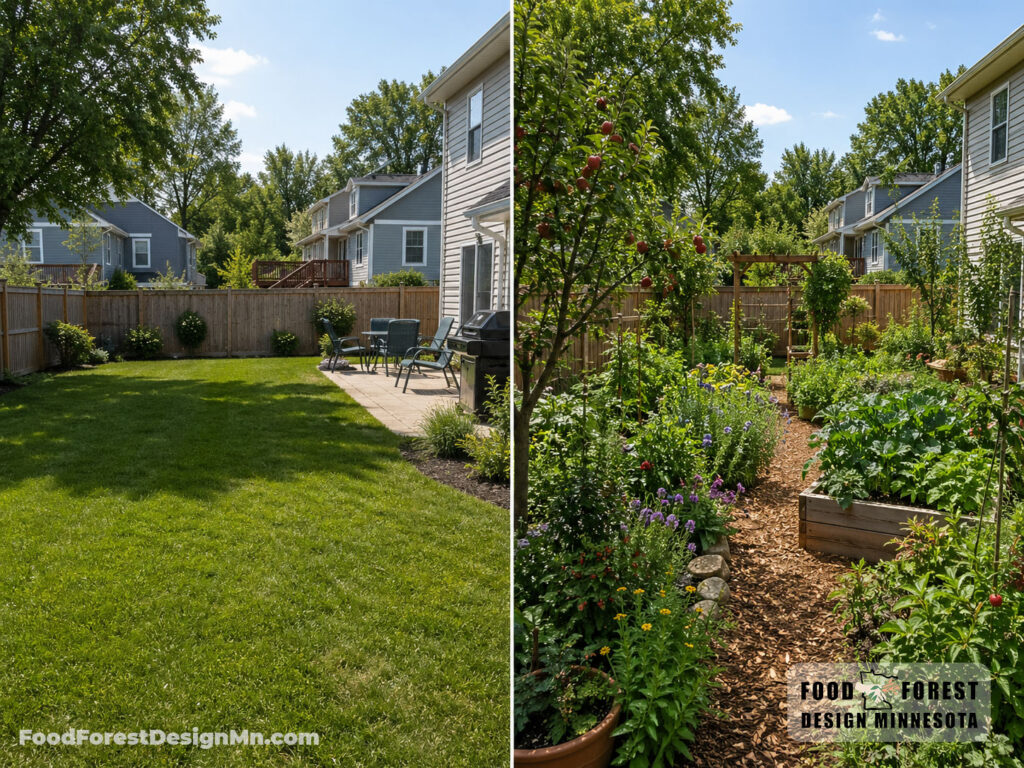
This step-by-step system was built for homeowners who want to turn ordinary yard space into a productive, low-maintenance, perennial food-growing ecosystem. Whether you have a suburban backyard, a side yard, a larger homestead space, or one small corner you want to make useful, this Blueprint gives you a clear way to start.
What Is a Food Forest?
A food forest is an edible landscape modeled after natural ecosystems. Instead of relying only on annual garden beds, a food forest uses layers of productive plants that work together over time.
That can include fruit trees, berry shrubs, herbs, pollinator plants, perennial vegetables, groundcovers, vines, support plants, and soil-building species. When planned correctly, these layers can create a beautiful, productive, and resilient backyard system.
The goal is not to create more work.
The goal is to create a living system that becomes stronger, more useful, and more abundant over time.
Why This Blueprint Was Created
Food prices continue to rise. Supply chains feel less reliable. More families are realizing that depending completely on outside systems for food is risky.
At the same time, millions of yards are sitting underused.
The DIY Food Forest Design Blueprint was created to help homeowners change that. It gives you a practical framework for turning empty lawn space into something that produces food, supports pollinators, improves soil, adds beauty, and builds long-term resilience.
This is not just another gardening guide.
It is a planning system for people who want to take action with confidence.
What the DIY Food Forest Design Blueprint Helps You Do
Inside the Blueprint, you will learn how to assess your land, understand your growing space, choose the right plants, and begin building a backyard food system that fits your property.
The system walks you through key food forest design steps, including:
- Assessing your yard and existing conditions
- Understanding sun, shade, soil, water, and access
- Choosing plants that fit your climate and goals
- Building food forest layers
- Designing fruit tree guilds
- Improving soil naturally
- Managing water more intelligently
- Avoiding common food forest mistakes
- Starting small without getting overwhelmed
- Planning for long-term growth and maintenance
Instead of guessing what to plant or where to place it, the Blueprint gives you a structured path.
From Empty Lawn to Edible Landscape
A food forest changes the mission of your yard.
Instead of maintaining space, you can begin building a living landscape that produces fruit, berries, herbs, perennial vegetables, shade, habitat, beauty, and long-term value.
Your yard does not need to become perfect overnight. You do not need acres of land. You do not need to be an expert gardener.
You just need a clear plan and a starting point.
That is exactly what the DIY Food Forest Design Blueprint is built to provide.
What Is Included
The Blueprint includes tools, guides, worksheets, plant references, sample blueprints, troubleshooting resources, preservation guidance, and support materials to help you plan your own backyard food forest.
It was designed to help you move from idea to implementation with less confusion and more confidence.
Whether your goal is to grow more food, reduce grocery dependence, create a healthier yard, support pollinators, or build a more resilient home landscape, this system gives you the foundation.
The Goal Is Simple
- Grow more food.
- Reduce dependency.
- Build soil.
- Support pollinators.
- Create abundance.
- Start where you are.
The DIY Food Forest Design Blueprint is now officially available.
If you are ready to turn your yard into something more productive, beautiful, and resilient, this is your next step.