The cultivation method known as “The Three Sisters” or “Milpa” is an ancient agricultural technique practiced by indigenous peoples of the Americas. This innovative approach optimizes the growth of three essential crops: corn, beans, and squash. By leveraging the complementary benefits of each plant, this method creates a harmonious and sustainable agricultural system.
The Science Behind the Three Sisters
The success of the Three Sisters lies in the mutual support these crops provide each other. Each plant contributes uniquely to the overall health of the garden, enhancing productivity and reducing the need for external inputs.
1. Corn: The Tower of Strength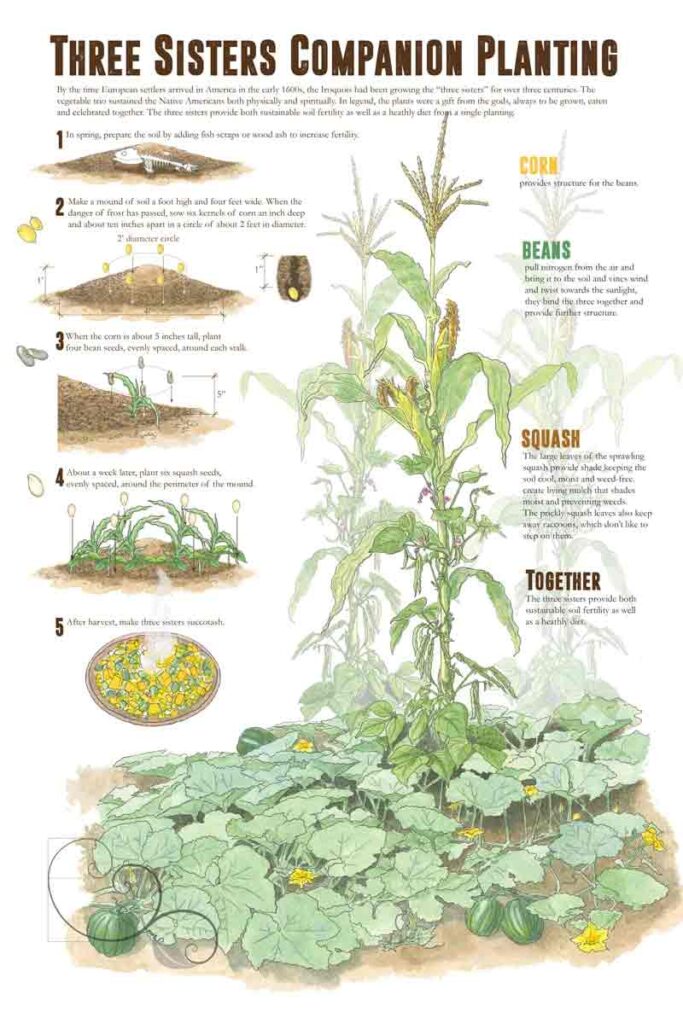
Corn serves as the backbone of the Three Sisters. Its tall stalks provide a natural structure for beans to climb, eliminating the need for artificial supports. Additionally, corn’s height creates partial shade, protecting the other crops from excessive sunlight.
2. Beans: Nature’s Fertilizer
Beans play a vital role in enriching the soil by fixing nitrogen, a crucial nutrient for plant growth. This not only benefits the corn and squash but also enhances the soil’s fertility for future planting. Nutritionally, beans are a valuable source of protein, making them an integral component of the diet.
3. Squash: The Protective Ground Cover
Squash acts as a natural mulch with its broad leaves spreading across the soil. This coverage helps retain soil moisture, reduces evaporation, and suppresses weed growth by blocking sunlight. As a result, it minimizes the need for watering and weeding.
The Benefits of the Three Sisters
1. Sustainability and Soil Health
This method improves soil structure and fertility without relying on synthetic fertilizers or chemicals. The beans’ nitrogen fixation enriches the soil, while the squash’s ground cover prevents erosion.
2. Efficiency and Resource Optimization
By combining these crops, farmers maximize their yield in limited spaces. The complementary growth habits of the Three Sisters reduce competition for resources like sunlight, water, and nutrients.
3. Resilience and Biodiversity
The Three Sisters’ interdependence creates a resilient agricultural system. If one crop struggles due to pests or weather conditions, the other two can continue thriving, ensuring food security.
Modern Applications of the Three Sisters
While rooted in tradition, the Three Sisters method is highly relevant to today’s sustainable agriculture. Gardeners and farmers worldwide can adopt this technique to promote biodiversity, reduce chemical dependency, and create more resilient food systems.
Conclusion: Honoring Ancestral Wisdom
The Three Sisters is more than a cultivation method; it’s a testament to the ingenuity and ecological wisdom of indigenous peoples. By embracing this ancient technique, we can cultivate healthier gardens, nourish our communities, and contribute to a more sustainable future.
Join the backyard food forest revolution and recession-proof your family!
If the goal is to take your yard to the next level with a self-sustainable food forest contact us to set up a consultation
STEP 1 – Book a Free Consultation
STEP 2 – Buy a Food Forest Design Blueprint
STEP 3 – DIY the Blueprint Installation or Hire Food Forest Design Minnesota to install it for you