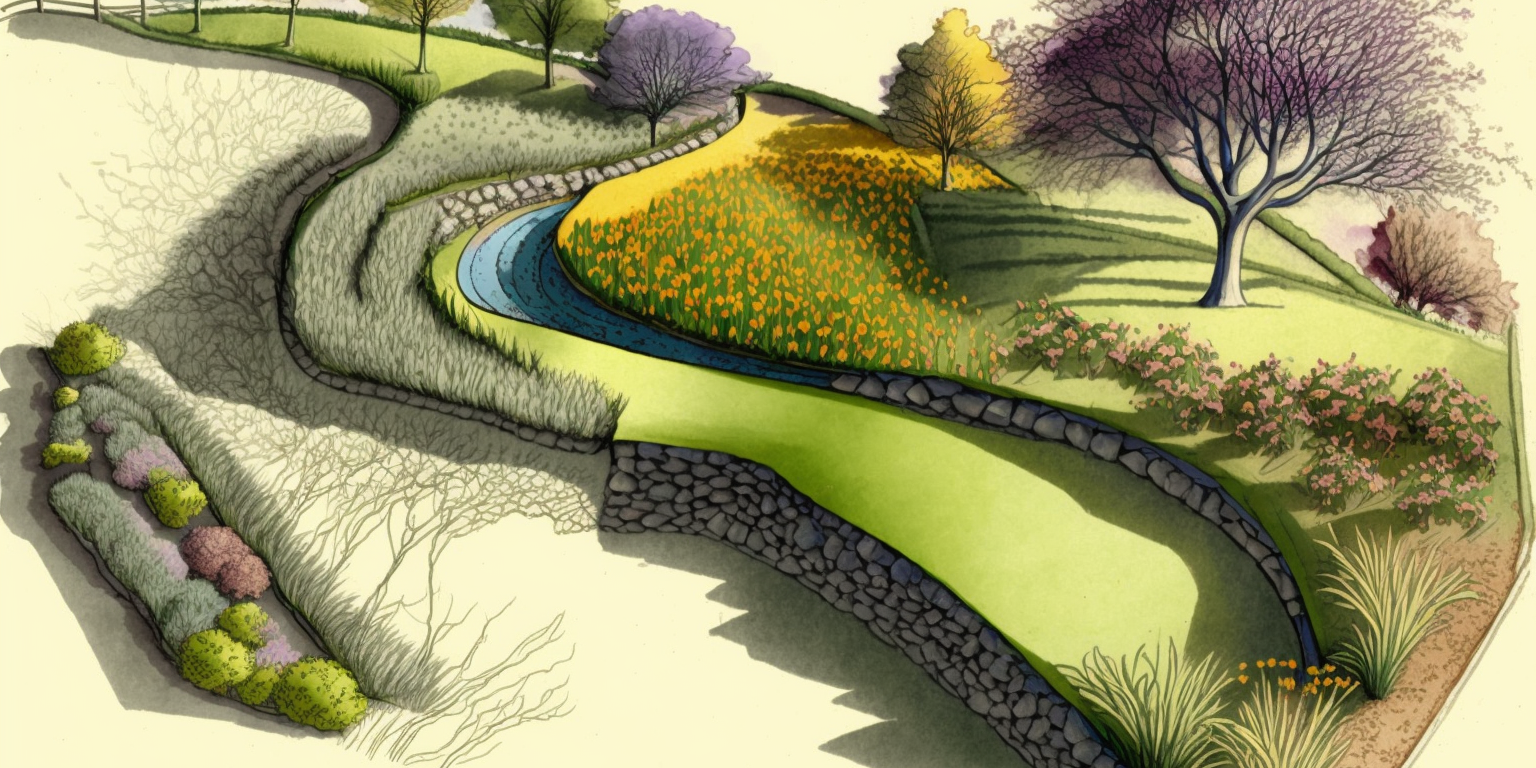
Adding swales to your landscape is a great way to capture and retain water, reduce runoff, and improve the health of your soil. Swales are shallow, curved channels that are designed to capture and direct water runoff from higher areas of your landscape to lower areas. They are an effective and low-cost way to manage water on your property and can be used to create a more sustainable landscape. Swales can also help to reduce erosion, improve soil fertility, and create a more attractive landscape. In this article, we will discuss the benefits of adding swales to your landscape, and provide tips on how to design and install them.
How to Maximize the Benefits of Swales in Your Landscape

Image from the World Permaculture Association
Are you looking for ways to maximize the benefits of swales in your landscape? Swales are an excellent way to conserve water, reduce erosion, and improve soil fertility. Here are some tips to help you get the most out of your swales.
1. Choose the Right Location: Swales should be placed on contour lines, which are lines that run parallel to the slope of the land. This will ensure that the water is evenly distributed and that the swale is effective in capturing and storing water.
2. Plant Appropriate Vegetation: Planting vegetation along the sides of the swale will help to slow down the flow of water and reduce erosion. Choose plants that are native to your area and that are well-suited to the soil and climate.
3. Use Mulch: Mulch is an excellent way to reduce evaporation and keep the soil moist. It also helps to reduce weed growth and improve soil fertility.
4. Monitor the Swale: Regularly check the swale for signs of erosion or other problems. If you notice any issues, take steps to address them right away.
By following these tips, you can maximize the benefits of swales in your landscape. Swales are an excellent way to conserve water, reduce erosion, and improve soil fertility. With a little bit of effort, you can ensure that your swales are working as effectively as possible.
How to Maintain a Swale in Your Landscape
Maintaining a swale in your landscape is an important part of keeping your property healthy and beautiful. Swales are shallow depressions in the landscape that are designed to capture and direct water runoff. They can help reduce erosion, improve water quality, and provide a natural habitat for wildlife. Here are some tips for maintaining a swale in your landscape:
1. Monitor the swale regularly. Check the swale for signs of erosion or sediment buildup. If you notice any issues, take steps to address them right away.
2. Keep the swale free of debris. Remove any debris such as leaves, twigs, and other organic matter that can clog the swale and prevent it from functioning properly.
3. Plant native vegetation. Planting native vegetation around the swale can help keep the soil in place and reduce erosion. Native plants are also beneficial for wildlife.
4. Mow the grass around the swale. Mowing the grass around the swale can help keep it free of debris and reduce the risk of erosion.
5. Add mulch. Adding mulch around the swale can help keep the soil in place and reduce erosion.
Maintaining a swale in your landscape is an important part of keeping your property healthy and beautiful. With a little bit of effort, you can ensure that your swale is functioning properly and providing the benefits it was designed to provide.
The Different Types of Swales and Their Uses
Swales are an important tool for managing water runoff and preventing soil erosion. They are an effective and affordable way to protect your property from the damaging effects of water runoff. Swales are also an important part of sustainable landscaping, as they help to conserve water and reduce the need for chemical fertilizers and pesticides.
There are several different types of swales that can be used for different purposes. The most common type of swale is the grass swale, which is a shallow ditch filled with soil and grass. This type of swale is used to slow down the flow of water and reduce the amount of soil erosion. It also helps to filter out pollutants from the water, making it safer for plants and animals.
Another type of swale is the rock swale, which is a shallow ditch filled with rocks and gravel. This type of swale is used to slow down the flow of water and reduce the amount of soil erosion. It also helps to filter out pollutants from the water, making it safer for plants and animals.
The third type of swale is the wetland swale, which is a shallow ditch filled with water. This type of swale is used to slow down the flow of water and reduce the amount of soil erosion. It also helps to filter out pollutants from the water, making it safer for plants and animals.
Swales are an important part of sustainable landscaping and can be used to protect your property from the damaging effects of water runoff. They are an effective and affordable way to protect your property from the damaging effects of water runoff. Swales are also an important part of sustainable landscaping, as they help to conserve water and reduce the need for chemical fertilizers and pesticides. So, if you are looking for an effective and affordable way to protect your property from the damaging effects of water runoff, consider using swales.
The Benefits of Adding Swales to Your Landscape
Are you looking for a way to improve your landscape while also helping the environment? Adding swales to your landscape is a great way to do just that! Swales are shallow, vegetated channels that are designed to capture and store rainwater runoff. They are an effective and low-cost way to reduce flooding, improve water quality, and conserve water. Here are some of the benefits of adding swales to your landscape.
First, swales can help reduce flooding. By capturing and storing rainwater runoff, swales can help reduce the amount of water that flows into storm drains and nearby waterways. This can help reduce the risk of flooding in your area.
Second, swales can help improve water quality. By capturing and storing runoff, swales can help filter out pollutants and contaminants from the water. This can help improve the quality of the water in your area.
Third, swales can help conserve water. By capturing and storing rainwater runoff, swales can help reduce the amount of water that is lost to evaporation. This can help conserve water and reduce water bills.
Finally, swales can help create a more attractive landscape. Swales can be designed to blend in with the surrounding landscape, creating a more aesthetically pleasing environment.
Adding swales to your landscape is a great way to improve your landscape while also helping the environment. Swales can help reduce flooding, improve water quality, conserve water, and create a more attractive landscape. So, if you’re looking for a way to improve your landscape while also helping the environment, consider adding swales to your landscape today!
How to Design and Install a Swale in Your Landscape
Are you looking for a way to improve the look and function of your landscape? Installing a swale is a great way to do just that! Swales are shallow, grass-lined channels that are designed to capture and direct stormwater runoff. Not only do they help to reduce flooding and erosion, but they also add a unique and attractive feature to your landscape. Here’s how to design and install a swale in your landscape.
First, you’ll need to determine the best location for your swale. Look for a spot that is low-lying and has good drainage. You’ll also want to make sure that the swale is located away from any structures or trees.
Once you’ve chosen the location, you’ll need to design the swale. Start by marking the boundaries of the swale with stakes and string. Then, use a shovel to dig a shallow trench that follows the shape of the swale. Make sure that the trench is wide enough to accommodate the grass you’ll be planting.
Next, line the bottom of the trench with a layer of gravel. This will help to ensure that the swale drains properly. Then, fill the trench with soil and plant grass seeds. Water the grass regularly until it is established.
Finally, you’ll need to install a drainage pipe at the end of the swale. This will help to direct the water away from your property and into a safe area.
Installing a swale in your landscape is a great way to improve its look and function. With a little bit of planning and effort, you can create a beautiful and functional feature that will last for years to come.
Conclusion
Adding swales to your landscape is a great way to capture and retain water, helping to reduce runoff and improve soil health. Swales can also help to reduce erosion, improve water infiltration, and create a more attractive landscape. With the right design and maintenance, swales can be an effective and attractive way to manage water on your property.